Hot Topics in (Materials) Science & Engineering Education
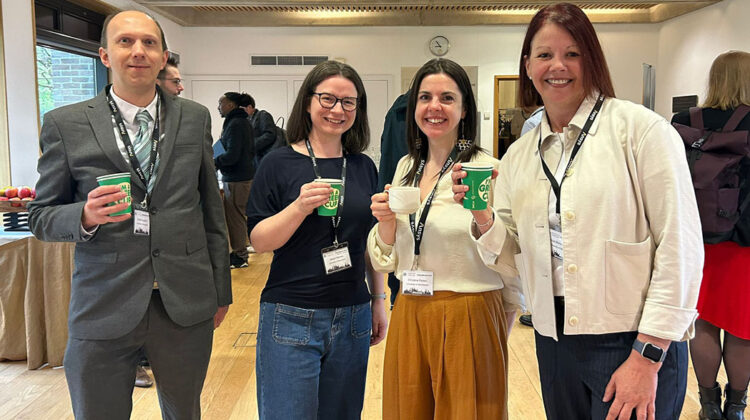
In April 2026, members of the MATTER group — the MATerials Teaching, Education and Research group — attended the International Materials Education Symposium (IMES) in Cambridge. The event brought together educators, researchers and practitioners working across materials science and engineering education, and provided a valuable opportunity to reflect on themes that are already shaping teaching in Manchester, as well as ideas colleagues may want to explore further. Below, Daniel Engstrom, Alison Harvey, Patricia Munoz-Escalona and Christina Picken, share their thoughts, reflections and highlight ideas that prompted discussion within the group and that may act as starting points for wider conversations for colleagues concerning teaching, curriculum design and student experience.
Design, biodesign and the materials – biology interface
A recurring theme across the symposium was the growing connection between materials, biology and design. Several contributors approached “biodesign” from different disciplinary perspectives, but a shared thread was the increasing interest in materials that draw on natural systems, use bio-derived resources, or break down more safely within natural environments. We know students are already thinking about material choice, sustainability, user experience and product lifecycles. The design perspective also prompted us to think about how we showcase student project outputs. Materials students often produce work that is not only technically rich but also highly visual, tactile or physical.
Questions raised:
- How might we make more of the distinctive teaching and research environment we have in Manchester?
- Are there opportunities to build strong links between materials science and fashion business and technology?
- How can we showcase outputs that are digital, solid, liquid, experimental or design led in a more engaging or accessible way?
Sustainability as a core part of materials education
Sustainability education is now an essential part of the materials curriculum, but it remains complex to teach well. Students will go on to a wide range of careers, and sustainability needs to be presented not as a single topic or add-on, but as a way of thinking that informs materials selection, design, processing, lifecycle analysis and professional judgement.
Practice example:
The symposium opened with keynote speaker Professor Barbara Pollini, with a strong focus on embedding sustainability within materials design and education. One example involved students developing a business plan that used waste materials as a feedstock for a new product, encouraging them to connect technical, environmental and commercial thinking.
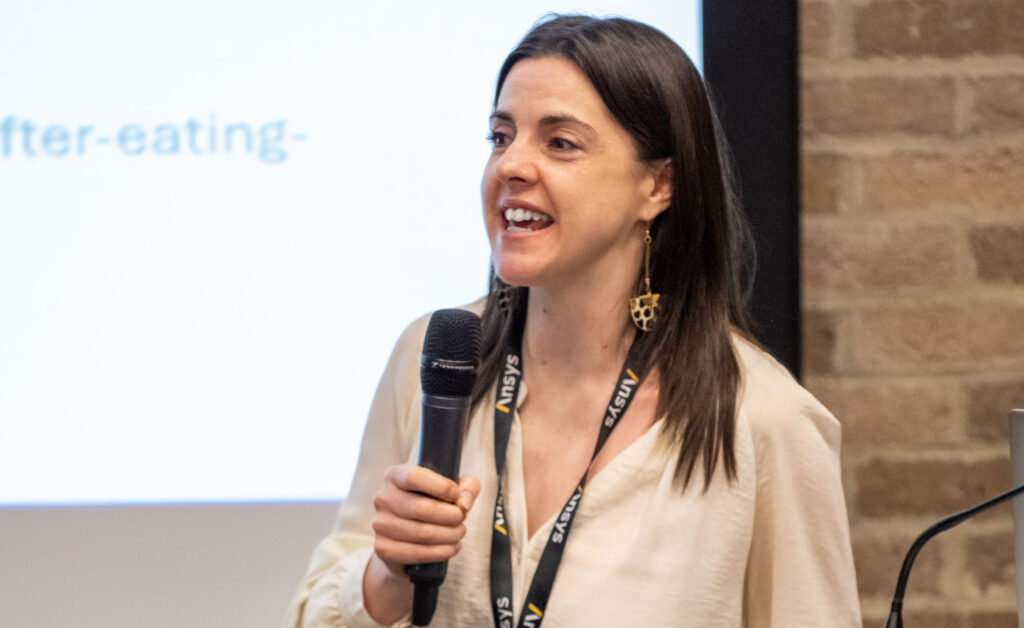
Christina Picken also presented a case study on using the 12 principles of green chemistry to redesign a lab practical. This work highlighted both the explicit learning outcomes of a practical class, and the implicit messages students receive through the way laboratory work is designed.
Questions raised:
- How can investigative sustainability work be built into laboratory sessions, including through approaches such as design of experiments?
The pre-conference workshop on Ansys Granta EduPack also highlighted how materials selection tools can support conversations about performance, environmental impact and social responsibility. These tools may provide useful ways to help students compare trade-offs and make more informed design decisions.
The importance of terminology
An interesting theme (and one we might not touch on so often) that appeared repeatedly was terminology.
In materials education, we use many terms that can feel obvious to those already within the discipline, but which may form part of the hidden curriculum for students. Some terms have different meanings in different fields, while others overlap or are used interchangeably.
One that comes up often in our 1st year unit Materials Shaping the World is the distinction between Biomaterials and Biological/Natural Materials, especially given the increasing drive towards more sustainable materials.
Questions raised:
- How clearly do we define the language we use?
- Are students supported to move from everyday language to professional terminology?
- How do we ensure consistency across units, while also helping students understand that terminology can shift between disciplinary contexts?
Practice example:
One useful idea introduced by Dauphiny Pottmaier and discussed at the symposium was the use of word clouds at the start and end of a unit. This can help students see how their language develops over time, moving from simple or familiar words towards more precise and professional disciplinary language. Glossaries, webpages and other shared resources may also help reinforce terminology and support students as they develop professional language skills.
Supporting group work more intentionally
Group work remains one of the most important — and often most challenging — aspects of teaching. It develops skills that are central to professional engineering and materials practice, but students often need structured support to work well in teams.
Practice example:
Several symposium contributions explored how group work can be made more inclusive, constructive and purposeful. One example from Julian Dean at the University of Sheffield the use of student-led contracts in a first-year, first-semester unit. These contracts enabled students to define expectations, agree responsibilities and establish accountability within the group. The wider approach also included professional audits, reflective practice, feedback exercises and presentation activities to support the development of teamworking skills.
This resonated with our own experience. Group contracts are already used in third- and fourth-year team and individual research projects, but there may be value in introducing this type of structured support earlier in the programme and in a consistently used approach. Doing so could help students build confidence, accountability and reflective teamworking skills before they encounter larger or higher-stakes group projects.
Curriculum models, disciplinary identity and student development
One of the stand-out curriculum ideas was the distinction between students knowing materials science content and students developing a sense of themselves as materials scientists. This framing connects with wider ideas around knowing, acting and being, and encourages us to think beyond content coverage towards disciplinary identity, epistemic fluency and professional formation.
Questions raised:
- How do students engage with course content?
- How do students develop disciplinary ways of thinking?
- How do assessment practices support or limit students development?
If we want students to move beyond recall and towards confident, integrated disciplinary thinking, then curriculum and assessment design need to create opportunities for that progression.
For the MATTER group, this connected strongly with conversations about global competencies in materials education. Building identity, accountability, resilience and motivation may be just as important as helping students master technical content.
Generative AI, haptic learning and the value of hands-on experience
As expected, generative AI featured within discussions of teaching and learning. However, one of the most memorable contributions from Steffan Ritter began not with AI itself, but with the importance of haptic feedback and embodied learning. The argument was that students learn through direct sensory engagement with materials: feeling resistance, texture, response and behaviour in ways that digital tools cannot fully replicate.
This was a useful reminder that, while AI tools may change aspects of teaching, learning and assessment, they do not replace the value of hands-on materials experience. Laboratory work, making, testing, handling and observing remain central to how students conceptualise materials and develop intuition.
Questions raised:
- How might AI support learning without displacing the experiences that matter most?
- Can AI create space for deeper conceptual engagement?
- Can AI support students’ preparation, reflection or feedback?
- How do we ensure AI helps students think, rather than simply producing answers for them?
Where next?
The symposium gave us plenty to think about. Several themes — sustainability, terminology, group work, disciplinary identity, curriculum design and AI — are already active concerns in our teaching. What felt particularly valuable was seeing these ideas discussed across institutions and from different disciplinary perspectives.
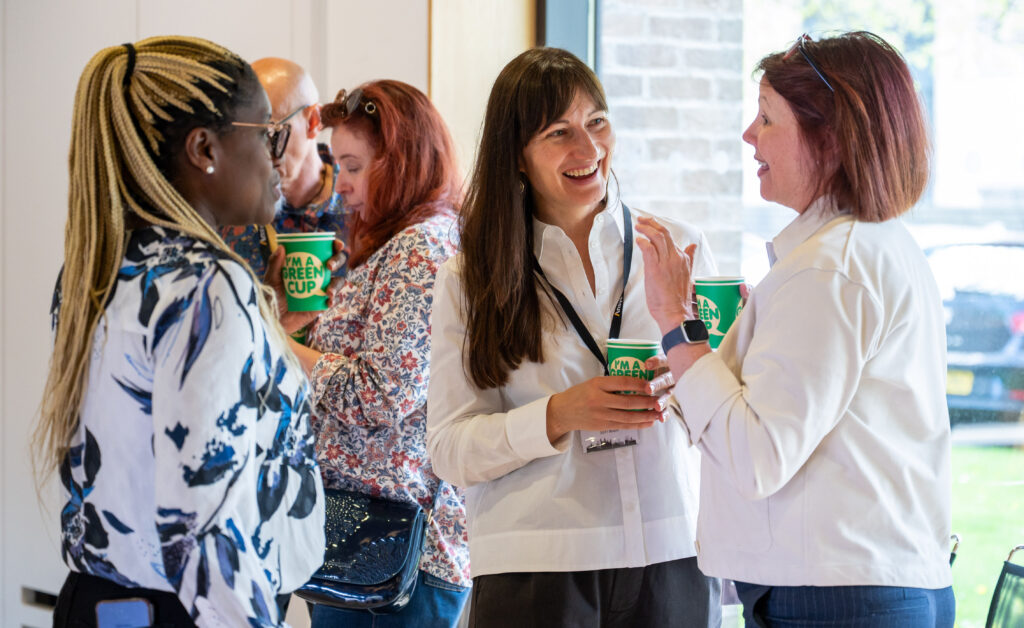
For colleagues who were not able to attend, we hope these highlights provide useful prompts for discussion. In particular, we would be interested to explore:
- where biodesign and sustainability could be more explicitly connected within our teaching;
- how we support students’ use of professional terminology across the programme;
- whether structured group contracts could be introduced earlier in the curriculum;
- how assessment can support students’ development as materials scientists, not just their knowledge of materials science;
- and how we use AI in ways that protect and enhance hands-on, embodied learning.
The conference reinforced the value of taking time to step back from individual units and consider the wider educational experience we are creating. It also highlighted that many of the questions we are asking in Manchester are being explored more widely across the materials education community.