
Supporting students from classroom to community: Meet Ognjen Marjanovic
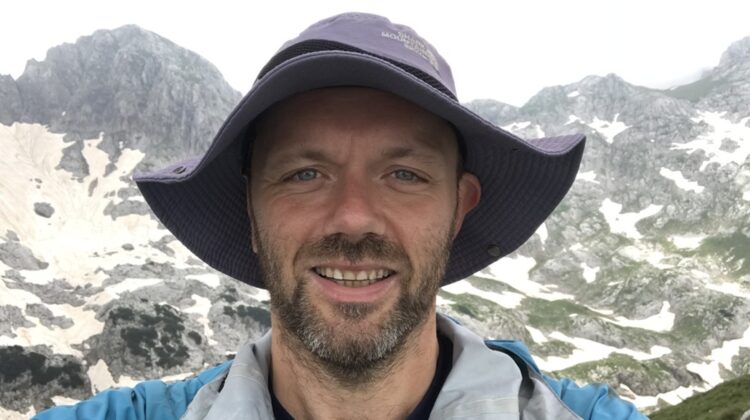
Ognjen Marjanovic, Reader in Electrical and Electronic Engineering, has played a key role in redesigning the undergraduate curriculum while remaining closely connected to students through teaching, community-building and student voice. Recently nominated for a Distinguished Achievement Award, we spoke to Ognjen about curriculum design, creating belonging and his love of teaching.
You have played a key role in redesigning the undergraduate curriculum. What was the vision behind that work?
A lot of curricula can develop from the lecturer’s perspective. Someone takes on a unit, changes it slightly then someone else does the same with another unit. It can work, but we don’t always step back and look at the whole student journey. For me, the important thing was to look at the curriculum from the students’ perspective. Students should feel that they are gradually building their knowledge. I sometimes think of it as ‘peeling an onion’ – in first year students are introduced to key concepts at one level, then they revisit and deepen that knowledge as they progress and begin to specialise.
How have the curriculum changes improved the student experience?
One major change was moving towards larger 20-credit units. That can reduce the number of separate assessments, exams and administrative processes, but the main benefit for me is coherence. Instead of lots of smaller chunks, students have bigger blocks of learning that connect more clearly. It also helps us think more carefully about progression. In first year especially, we want students to develop the right foundation before moving into year two. There are challenges of course because with fewer assessments, each one carries more weight for students, but pedagogically it helps us make sure students are building the knowledge they need.
Ultimately I love teaching. I often say that if I won the lottery, I would move to the Lake District but I would still want to teach.
Students describe your teaching as energetic and supportive. What is it about teaching that continues to inspire you?
Ultimately I love teaching. I often say that if I won the lottery, I would move to the Lake District but I would still want to teach. Maybe not mark exams but I would definitely still want that interaction with students. Teaching is also a powerful way to learn. Students ask questions you have never thought of before and if something is not clear, that will quickly come across. That makes me better as a lecturer. I want students to enjoy the lecture, but I also want them to have those moments where something suddenly clicks.
How do you create a supportive environment for students?
I try to create an environment that feels friendly and approachable. I do not want students to feel there is a huge distance between us – I want them to feel able to speak to me. I also understand what it feels like to arrive in Manchester as an overseas undergraduate student because that was my own experience. For many students, whether they come from the UK or abroad, university is a major transition. They are building a new life and a new community so that sense of support really matters.
You organise student hikes. Can you tell me more about these and why they’re important?
The hikes are part of building that community. I love the Lake District but the Peak District is close to Manchester and I want students to realise how accessible it is. We travel by public transport so students can repeat the walk themselves later. That is important to me. It is not just about one day out; it is about helping them feel confident exploring the area, spending time with each other and feeling more at home here. It gives students a chance to connect in a different way outside the lecture theatre.
You have also strengthened student voice processes. Why was that important?
Student voice is not just about waiting for a committee meeting. Some issues need to be addressed within a few days, not weeks later. We have year tutors who act as a close point of contact for each year group and work with student reps to identify and resolve issues quickly. That means acute problems, such as assessment bunching or issues with coursework, can be picked up earlier. Then Student Voice Committee meetings can focus on broader issues such as facilities, the university environment or future curriculum changes. It helps us close the loop with students more effectively.
How do you balance programme-level leadership with hands-on teaching and student support?
I think it is important to stay connected to the student experience. If you are involved in leadership but no longer teach, students can start to feel abstract and become numbers to move through a system. I like the analogy of a captain of a ship. The captain needs to look at where the ship is going, but every now and then they also need to go and speak to the people doing the work below deck. You need that direct experience to make good decisions.
I do not want students to feel there is a huge distance between us – I want them to feel able to speak to me.
Beyond teaching, what keeps you motivated in your role?
I feel very motivated by being part of a Department community. It feels more like an extended family with people working together for a shared purpose. I enjoy helping colleagues, solving problems and finding ways to make things better for students. That sense of being useful, contributing to the community and helping create a supportive environment is what keeps me motivated.
Finally, how long have you been at the University?
I first came to Manchester as an undergraduate student in 1995 living in Owens Park. I then stayed for my PhD, worked in industry for a while and later had the opportunity to return as a lecturer.
Manchester has been a huge part of my life. I loved it enough to stay and although I still dream about the Lake District, this place has become home.