
Inspiring socially responsible engineers: Meet Mauro Luberti
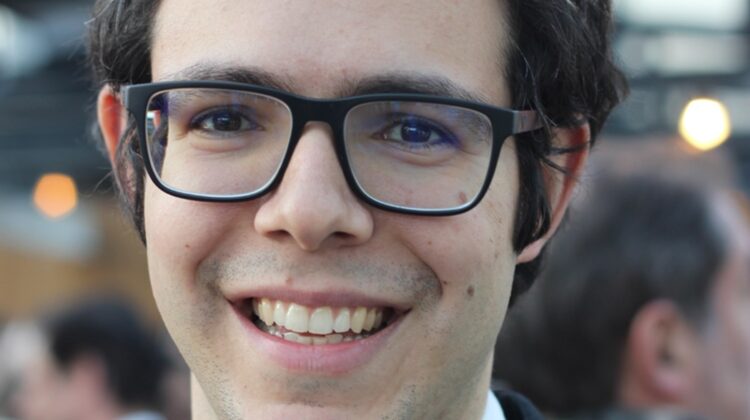
Mauro Luberti, Senior Lecturer in Chemical Engineering, brings theory, industry practice and sustainability together to prepare students for life beyond university. Recently nominated for a Distinguished Achievement Award, we spoke to Mauro about keeping large cohorts engaged, improving feedback and inspiring the next generation of engineers.
You teach large cohorts across different year groups. How do you keep students engaged?
Teaching large cohorts means recognising that students need different ways to engage. At Manchester, some first-year cohorts can be around 240 to 250 students, which is very different from the smaller groups I taught earlier in my career. It is also very different teaching first-year students, who are still adjusting to university, compared with fourth-year students who are usually more focused and independent. I try to keep sessions active by moving between PowerPoint, a visualiser, worked examples, short videos and quick breaks. I also use Mentimeter for live questions and quizzes. It helps me check understanding but it also gives students a way to interact, pause and re-engage.
How do you connect theory with real-world engineering practice?
Chemical engineering is a very practical subject. Chemical engineers have helped shape modern society from oil and gas to plastics and medicine, and now they have a key role to play in the transition to low-carbon and net zero technologies. That means teaching cannot be only theoretical. I update examples and case studies regularly so students are working with issues that feel relevant today, not just examples from 20 or 30 years ago. My volunteering with the UN-led Intergovernmental Panel on Climate Change also helps me bring current sustainability discussions into the classroom.
Why is sustainability such an important part of your teaching?
Many of our students will become process engineers, plant engineers or consultants in industries that are already changing. They need to understand sustainability not as a separate topic but as something embedded in engineering practice. In the early stages of the degree that might involve smaller examples linked to fundamental concepts. By the final year, students are ready to engage much more directly with industrial practice. I also invite guest speakers from industry so students can hear how sustainability policies and low-carbon technologies are already affecting companies.
Engineering is powerful because its principles apply across borders and come from nature. It is a way of solving problems that matter to everyone.
You have introduced software workshops into one of your modules. What do students gain from them?
The workshops use commercial chemical engineering software to show how concepts from chemical thermodynamics are applied in industry. They help students see that the equations and theory they study are built into tools used by process engineers. Students told me the workshops helped them connect the lecture material with real practice and after introducing them initially, overall module marks increased by around three to four percent. I wouldn’t say that was entirely because of the workshops, but they definitely supported engagement and learning.
Feedback is a clear strength of your teaching. What is your approach?
I think feedback has to happen through different channels. Canvas discussion boards have been particularly useful. I organise them by week, topic, coursework and exams and students can post questions anonymously, which encourages more people to take part. In one fourth-year module, I saw undergraduate and postgraduate students replying to each other and creating a really valuable peer dialogue. That was especially encouraging because it meant feedback was not only coming from me; students were learning from one another, sharing their understanding and building confidence through discussion.
You have worked to improve GTA marking. Why was that important?
Graduate Teaching Assistants are essential in large cohorts, but they can have very different levels of experience. I wanted to help make marking and feedback more consistent for students while also improving the experience for GTAs themselves by giving them clear guidance. I developed a GTA training workflow where GTAs mark the same piece of work together, discuss their decisions and agree a shared standard before marking independently. That practical element made a huge difference.
You also are more formally involved in mentoring GTAs. What do you enjoy about this aspect of your role?
I have mentored GTAs through the Mentoring Excellence Programme for two years, supporting 10 people applying for Associate Fellowship of the Higher Education Academy. All 10 were successful. What I enjoy most is helping PhD students recognise the value of their teaching. Whether they are supporting labs, workshops, marking or feedback, they are making a real contribution to the student experience.
Chemical engineers have helped shape modern society from oil and gas to plastics and medicine, and now they have a key role to play in the transition to low-carbon and net zero technologies.
What do you hope students take away from learning with you?
Of course I want students to gain the knowledge and skills they need. But more than that, I want them to feel passionate and inspired by what they are studying. I hope they leave as competent engineers who are ready to make a difference whether in industry, academia, consultancy or research. Engineering is powerful because its principles apply across borders and come from nature. It is a way of solving problems that matter to everyone.
Finally, how long have you worked at the University?
I have been here for four years. Before that I studied in Rome, worked in Brussels, completed my PhD and postdoctoral work at the University of Edinburgh, spent five years in London as a consultant engineer with Siemens and then returned to Edinburgh as a lecturer before coming to Manchester. That journey has taken me across five cities and three countries. I am also very proud of my volunteering work with the Intergovernmental Panel on Climate Change because it is work for the whole world, and that perspective is something I try to bring into my teaching.