
Supporting graduate interns in the eLearning Team
Since last June, FSE’s eLearning Team has been working with a cohort of graduate interns to support the University’s transition to Canvas. Learning Technologist Siân Roughley shares how the interns have been supported, the impact they’ve had and what she’s learned along the way.
Can you tell me how you became involved in supporting the graduate interns?
The interns joined us as part of the Flexible Learning Programme funding to support the transition to Canvas. We initially recruited eight interns, and I was asked to lead on how they would be managed and supported. As I’d only started line managing relatively recently, it was a new challenge for me. Rather than line managing all of them directly, I took on more of a project management role, overseeing their work, while each intern also had a dedicated line manager and mentor. That gave them a really strong support structure across the team.
What kind of work have the interns been involved in?
They’ve played a really hands-on role in the Canvas transition. A big part of their work involved supporting academics to build their course spaces. Although content was migrated from Blackboard, it still needed to be structured properly within Canvas and aligned to the University’s template. The interns worked directly with academics to organise materials, build out course units and ensure everything met the required standards. They also carried out quality assurance across all course units in the Faculty. Using a checklist based on the template, they reviewed every space to make sure key elements such as course information, weekly structure and assessment details were in place. They then revisited courses after initial feedback to check improvements had been made. They’ve been vital – we would have really struggled delivering the transition at the same scale without them.
I’ve loved my time working in the FSE eLearning team. I’ve been able to develop so many skills throughout my internship and I’m extremely grateful for all the opportunities I’ve had. I could not have asked for a better introduction to working at the University.
Louisa Bickley – Digital Learning Graduate Intern
You’ve put a strong focus on development opportunities. Can you tell me more about these?
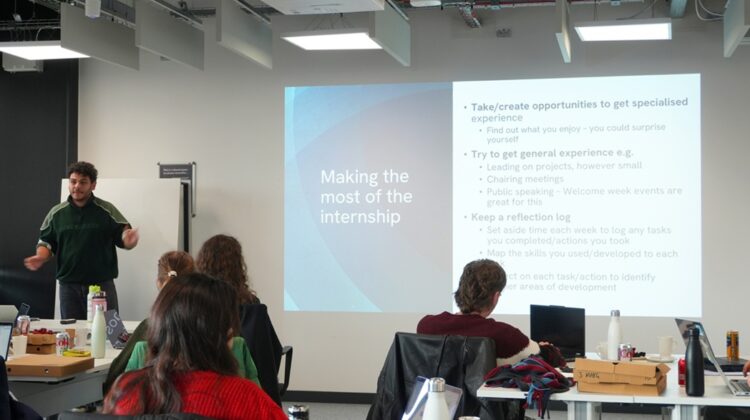
One of the main things we’ve introduced is dedicated development days. These are designed to help interns understand the range of roles available across the University and think about their next steps, particularly as many of them are still exploring what they want to do after their internship. We’ve had colleagues come in to talk about careers in areas like data analysis and project management, giving insight into what those roles look like day-to-day and how to get into them. Alongside that, we’ve included wellbeing sessions and more practical workshops, for example around job applications and how to approach competency-based questions, which are useful regardless of the role they go on to apply for.
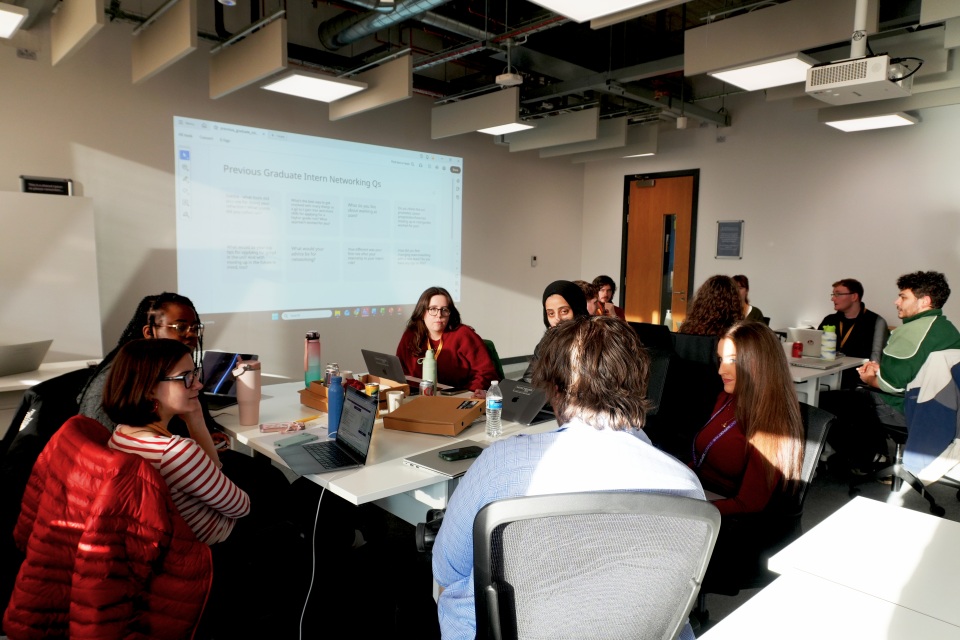
We’ve also invited previous graduate interns to share their experiences which has been really valuable. Hearing from people who have been in a similar position and successfully moved into roles across the University helps make those career paths feel more visible and achievable.
Have there been opportunities beyond their core roles?
Another key thing we’ve introduced is shadowing opportunities across different teams. Some interns have spent time with Student Hubs to gain more experience of student-facing roles and others are now working one day a week with another team on live projects. It’s about helping them explore different career paths and build a broader skill set.
You’re also exploring ways to connect interns more widely. What are your plans?
We’re looking at setting up a network for both interns and their line managers. At the moment, interns are quite dispersed across the University and there isn’t really a structured way for them to connect. Creating a network would give them more opportunities to share experiences and support each other.
Alongside that, I’d like to build a community of practice for line managers. Managing interns is often someone’s first experience of line management so having a space to share ideas, resources and approaches, like development activities, would be really beneficial.
What motivated you to put so much focus on development and support for the interns?
I think a lot of it comes from my own experience. I was a graduate intern at another university and I had a really positive experience with lots of development opportunities and chances to connect with others.
From what I could see, there was an opportunity to bring more structure and visibility to the support available and to create something that felt more joined up and meaningful.
It’s about recognising that an internship is a stepping stone. It’s not just about the work they’re doing while they’re here but helping them think about what comes next and giving them the tools and confidence to get there. If we can give them a more well-rounded experience and open up different possibilities, then we’re helping to set them up for what comes next.
What’s been the feedback from the interns?
The feedback has been really positive particularly around the interactive elements of the development days and the opportunity to network with previous interns. They’ve also really valued the practical support around job applications and understanding different career routes.
I’ve enjoyed being involved in a project that has had such a huge, positive impact on the student experience and having been able to use my recent experience as a student to influence this. I’ve learned how much work goes into every aspect of the student experience; how many people are working behind the scenes to make it operate as smoothly as possible.
Nina Mitchell – Digital Learning Graduate Intern
What have you learned from this experience?
A lot! One of the biggest things has been learning how to coordinate and balance workloads across a larger group, making sure everyone has the right amount of work and support. Running regular team meetings and keeping oversight of multiple projects has also been a big learning curve. It’s definitely developed my confidence as a manager.
What has made you most proud?
Seeing the interns progress into their next roles has been a real highlight. Knowing that we’ve played a small part in helping them take that next step is really rewarding. We’ve also had fantastic feedback from academics and colleagues across the University about the work they’ve done. They’ve gone above and beyond what you might expect at this stage in their careers.
What advice would you give to others managing graduate interns?
Think of it as a developmental role, not just extra resource for a project. It’s important to consider what the interns will gain from the experience and how it will support their future careers. Being open with them about their next steps and supporting them to build relevant skills makes a big difference. Ultimately, it’s about helping them leave the role with confidence, experience and a clear sense of direction.