Success by Design: Reflections from the Advance HE Teaching and Learning Conference 2026
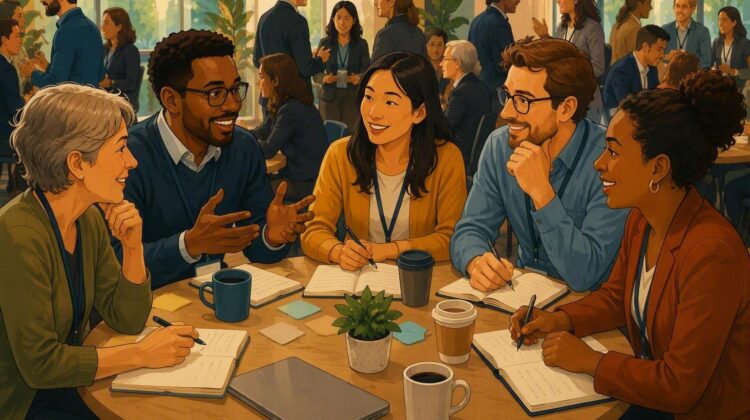
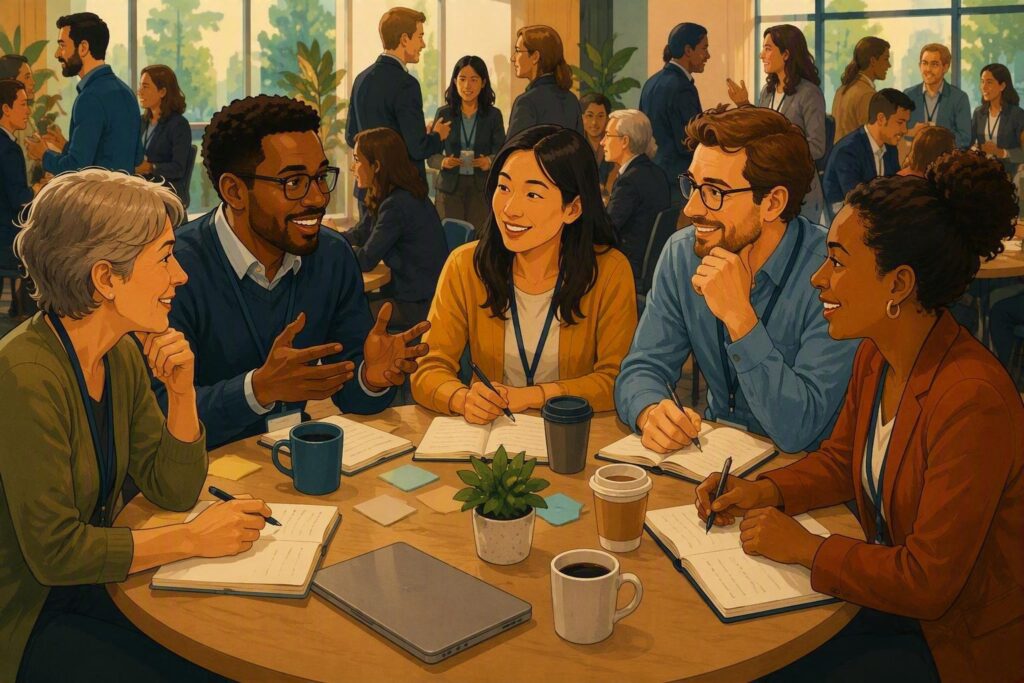
Staff from FSE and across the University had the opportunity to attend the Advance HE Teaching and Learning Conference 2026, Success by Design: The Future of Learning Now. Bringing together colleagues from across Higher Education , the conference explored some of the most pressing questions currently facing teaching and learning, from assessment in the age of generative artificial intelligence (GenAI) to staff development, curriculum design and student engagement. Below, Oli Taylor, FSE TLSE CPD Coordinator shares his thoughts and reflections on the conference,
As someone working in academic development within the Faculty of Science and Engineering (FSE), many of the themes felt immediately relevant. What I found particularly valuable was the opportunity to step away from day-to-day operational priorities and consider the broader direction of Higher Education. While there was no shortage of discussion about emerging technologies and sector challenges, the overriding message was one of intentional educational design, thinking carefully about what we want students to learn, how we know they have learned it, and how we support colleagues to create those learning experiences.
Assessment, evidence and academic judgement
Unsurprisingly, use of GenAI by staff and students was a dominant topic throughout the conference. However, the most thought-provoking discussions were not focused on detection tools or preventing misuse. Instead, speakers challenged delegates to consider whether GenAI is exposing deeper questions about how we assess learning in Higher Education.
One keynote particularly resonated with me. Rather than presenting GenAI as the problem itself, the speaker suggested that it has highlighted weaknesses in assessment approaches that rely heavily on the production of an artefact as evidence of learning. If a student can generate a well-written report with the support of AI, how confident can we be that the report alone demonstrates understanding? Did the same problems exist before the increased uptake of AI, but at a much lower frequency?
This prompted me to reflect on the growing importance of assessing processes alongside assessing products or artefacts. Several sessions explored approaches that capture evidence of decision-making, reflection, iteration and discussion throughout the learning journey. The increased use of vivas and structured conversations was also discussed as a way of providing richer evidence of student understanding.
What struck me most was the emphasis on academic judgement. Technology may change, but the role of educators in interpreting evidence, asking challenging questions and evaluating learning remains fundamental.
Making group work more meaningful
Another recurring theme was group work and collaborative learning. Speaking with colleagues, I have often heard conversations about the practical challenges of group assessment, fairness, participation and accountability. The conference encouraged delegates to look beyond these issues and consider the unique learning opportunities that collaboration can provide.
Several speakers argued that group work should not simply be viewed as a mechanism for completing projects more efficiently. Instead, it should be recognised as a way of developing skills that students will need throughout their professional lives, including communication, negotiation, leadership, teamwork and reflection.This perspective encouraged me to think differently about the purpose of collaborative activities. If we value these skills, then we should ensure they are intentionally supported and, where appropriate, recognised within assessment design.
I was particularly interested in discussions around peer review. Unlike traditional peer assessment approaches that focus on scoring or judging peers work or group performance, peer review was framed as an opportunity for students to develop evaluative judgement and feedback literacy. This feels especially relevant given the increasing emphasis on preparing students for professional environments where reviewing the work of others and responding constructively to feedback are essential skills.
Building authentic professional learning communities
The conference also highlighted the importance of staff development that goes beyond formal training sessions and workshops. Across a number of presentations, colleagues shared examples of peer learning networks, communities of practice and collaborative approaches to professional development.
This resonated strongly with my own experience supporting academic development programmes. Some of the most impactful professional learning often happens through conversations with colleagues, sharing challenges, discussing ideas and reflecting on practice together.
Several speakers suggested that effective staff development is increasingly about creating opportunities for connection rather than simply delivering information. This feels particularly important at a time when staff are navigating significant change, balancing competing priorities and responding to evolving student expectations.
The emphasis on authentic connection prompted me to reflect on how we design academic development opportunities within FSE. While structured programmes remain important, creating space for ongoing dialogue and peer support is equally valuable.
Designing for the future, not reacting to it
A theme that connected many of the conference sessions was the idea of educational design as a proactive process rather than a reactive one. Whether discussing assessment, curriculum development or staff development, speakers repeatedly emphasised the importance of understanding the needs and experiences of learners before jumping to solutions.
Design thinking approaches featured heavily within these discussions. Although the framework itself was not new to me, the examples demonstrated how powerful it can be when applied to educational challenges. Starting with empathy, understanding student experiences and testing ideas on a small scale can often reveal solutions that may not emerge through traditional planning approaches.
This was an important reminder that educational innovation does not always require large-scale transformation. Sometimes meaningful change begins with asking better questions, listening more carefully to students and colleagues, and being willing to experiment.
Key takeaways
Attending the conference reinforced several ideas that I will continue reflecting on in my own work:
- Assessment needs to focus on evidence of learning, not just assessment outputs. GenAI is prompting important conversations about how students demonstrate understanding and how academic staff make assessment judgements.
- The process of learning deserves as much attention as the final product. Reflection, discussion, feedback and iteration all contribute to meaningful learning experiences.
- Group work has value beyond the completion of a task. Collaborative learning can help students develop professional behaviours and skills that are difficult to cultivate through individual assessment alone.
- Professional development is most effective when it creates meaningful connections. Peer learning and community-building can be as important as formal training programmes.
- Educational design should begin with understanding people. Whether designing curricula, assessments or staff development initiatives, starting with the experiences of students and colleagues leads to more thoughtful and effective solutions.
Looking ahead
The conference provided an invaluable opportunity to reflect on the future of teaching and learning and to hear how institutions across the sector are responding to shared challenges. While discussions often focused on emerging technologies and changing expectations, I left with a sense that many of the core principles of good education remain the same but the lens through which they are viewed is changing.
Students still need meaningful learning experiences, constructive feedback, opportunities to collaborate and assessments that support genuine learning. Staff still need time, support and connection to develop their practice. The challenge for Higher Education is not simply to adapt to new technologies, but to use this period of change as an opportunity to think more carefully about what we value in learning and how we design educational experiences that allow both students and colleagues to thrive.
For me, the conference was less about finding definitive answers and more about asking better questions. Those questions will continue to shape the conversations we have across the Faculty as we work together to support teaching and learning excellence.