
Recognising impact in TLSE: Meet Gregory Lane-Serff
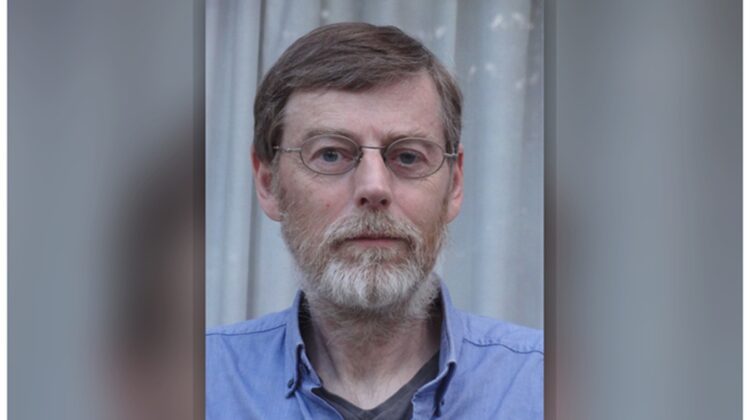
Gregory Lane-Serff, Senior Lecturer in the Department of Civil Engineering and Management, has spent over two decades helping students make sense of complex engineering concepts. Recently nominated for a Distinguished Achievement Award, we spoke to Gregory to find out how his teaching has evolved and what continues to motivate him after 26 years at the University.
Students often say you’re good at explaining complex ideas clearly. How do you approach that?
You’re often trying to explain quite complicated ideas that are expressed through mathematical equations, which can look like a mass of symbols to students. What I try to do is focus first on the underlying physical principles. So instead of starting with the equations, I begin with what those equations actually represent – things like energy, momentum or physical processes. I try to build a kind of narrative or ‘word picture’ first and then introduce the mathematics afterwards. I think that helps students see that the equations aren’t abstract, they describe something real and understandable.
Has that approach developed over time?
Yes, definitely. When you’ve been teaching for a long time, you start to recognise where students are likely to struggle. I also think it comes from how I approach research. I’m always interested not just in solving equations but in understanding what they mean physically. That way of thinking carries over into teaching. Over time, I’ve also thought more about how to structure whole courses around those key principles, rather than just individual lectures. That gives students a clearer framework to build their understanding.
One of the most important things is recognising that there isn’t just one way to teach well. Different people have different styles, and that’s a good thing.
Your teaching is also described as very engaging. How do you keep students involved during lecture
I try not to have students just sitting there listening for the whole session. I break lectures up with short problems that they work on during the class. Sometimes they’re very quick, just a couple of minutes, and sometimes they’re a bit longer. The idea is that students immediately apply what we’ve just covered.
That way, they’re actively involved rather than passively listening and they get immediate feedback on whether they’ve understood something or not.
Speaking of feedback, students highlight how supportive your approach is. Why is that important to you?
Feedback isn’t just about written comments on coursework. The in-class problems are a form of feedback in themselves because students can quickly see whether they’ve understood something.
Alongside that, I give individual feedback on coursework and then go through common issues in follow-up sessions. That helps students see where they might have gone wrong and, importantly, helps me identify patterns in where people are struggling. It’s about creating a continuous loop where students can keep improving.
What I find most rewarding is seeing students develop over the course of their degree. Watching that transformation and knowing they’re going on to make a positive contribution in the wider world is incredibly rewarding.
You’ve led the fourth-year group design project for many years. What do students gain from working on real-world projects like this
It’s one of the most important parts of the MEng degree. Students work in small groups on projects with industry partners, often based on real projects those organisations are working on. It brings together everything they’ve learned, from technical knowledge like structures and hydraulics to wider considerations like environmental impact, cost and buildability. They also develop skills in teamwork, communication and problem-solving and they get direct experience of working with industry professionals. It gives them a very realistic sense of what it’s like to work as an engineer and sets them up well for their careers.
How important is it to learn from colleagues and share teaching approaches?
One of the most important things is recognising that there isn’t just one way to teach well. Different people have different styles, and that’s a good thing. Students benefit from that variety and as colleagues, we can learn from each other. I’ve always found peer observation really valuable, both earlier in my career and now. Even after many years of teaching there are always new ideas, new approaches and new challenges, whether that’s technology, AI or changes in how students learn.
You’ve been at the University for 26 years. What has kept you motivated over that time?
What I find most rewarding is seeing students develop over the course of their degree. They come in straight from school or college and over three or four years they grow into confident, capable graduate engineers. It’s not just their technical knowledge, but their confidence, independence and ability to take responsibility. Watching that transformation and knowing they’re going on to make a positive contribution in the wider world is incredibly rewarding.
Finally, what advice would you give to someone starting out in teaching?
I think it’s important to focus on helping students really understand the fundamentals, not just memorise things and to be open to learning yourself from colleagues, from students and from experience. Teaching is something you keep developing over time.