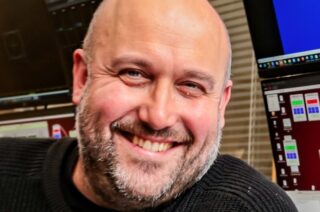
Meet Joz Sly, Senior Lecturer and Admissions Tutor for Foundation Year
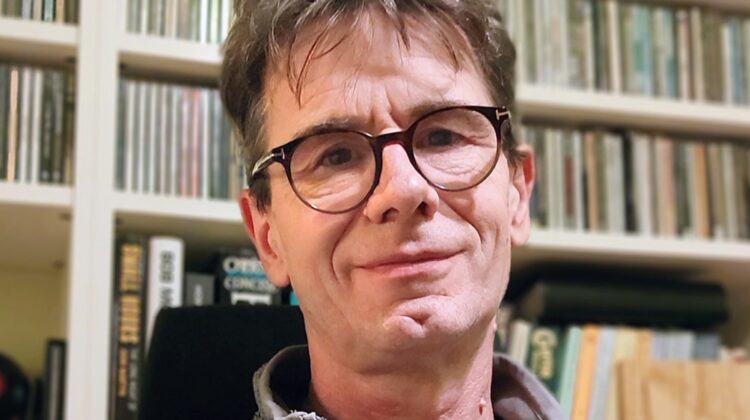
Having worked at the University for nearly 30 years, Joz teaches Physics on the Foundation Year and plays a key role in widening participation through admissions. Read on to find out what he enjoys most about his role, why seeing former Foundation Year students succeed means so much to him and how he spends his time outside work, from live music to a love of cheese.
Can you tell us about your role?
I’m a Senior Lecturer and the Admissions Tutor for the Foundation Year programme. I have been teaching Physics for Foundation Year students for over ten years now. The students I teach go on to a wide range of degree pathways across the Faculty so it’s a really varied and rewarding role. Alongside teaching, I oversee admissions for Foundation Year. We have twelve different pathways students can apply to, feeding into all Departments in the Faculty, so my role is to coordinate the process and work closely with departmental admissions teams to make sure we have the right balance of students across those pathways.
What makes Foundation Year admissions different from standard undergraduate admissions?
Foundation Year is all about widening participation. We’re not just looking at students with traditional A levels, we see applications from students with BTECs, T Levels, international qualifications and non-traditional academic backgrounds, including mature students returning to education. Because of that, many applications are reviewed on a case-by-case basis. It’s more complex and time consuming but it’s also a key feature of the Foundation Year – giving talented students a chance who may not meet the standard first-year entry requirements but who absolutely have the potential to succeed.
A crucial part of making this work is close collaboration with the departmental admissions teams. Rather than Foundation Year operating in isolation, admissions decisions are made by colleagues within departments who also handle standard undergraduate admissions. Over time, they’ve built up a huge amount of expertise in assessing Foundation Year applications, particularly when it comes to interpreting less familiar qualifications or mixed academic profiles. My role is to oversee that process, support those teams where needed and step in for academic assessments on more complex cases.
We want the programme to be as accessible as possible, but we also have a responsibility to ensure students have a realistic chance of progressing and thriving when they move into first year alongside students who may have very high entry grades. Working closely with departments helps us strike that balance, ensures admissions decisions are joined up and ultimately means students are better prepared for what comes next.
Giving talented students a chance who may not meet the standard first-year entry requirements but who absolutely have the potential to succeed
What do you enjoy most about your work?
Teaching, without question. You get immediate feedback from students – if a lecture goes well, you know straight away and if it doesn’t, you reflect and improve. That interaction with students is incredibly motivating. Teaching gives you that sense that you’ve genuinely helped someone, when they understand something at the end of the day that they didn’t at the start. That’s what keeps me going, even when I’m buried under marking or admin.
One of the most rewarding aspects of working on the Foundation Year is seeing students come back years later and hearing what they’ve gone on to achieve. Being based in the Nancy Rothwell Building means I regularly bump into former Foundation Year students some now in later years of their degree, some doing PhDs and others working in industry or even running their own companies. They’ll stop for a chat, tell me how they’re getting on and often remind me that the Foundation Year was the starting point of their journey.
Some of those students struggled significantly at the beginning. A few were close to not continuing at all, but with time, support and a chance to find their feet, they went on to do exceptionally well. Hearing them say that they might not have made it to Manchester, or into their current careers, without that alternative route into university is incredibly powerful.
How long have you worked at the University?
I started at the University in 1997 so it’s nearly 30 years now which still feels quite surprising. I originally joined Electrical Engineering in a research-focused role, working in areas such as semiconductor physics and collaborating closely with industry. Some of that work fed into very early developments in technologies we now take for granted, including autonomous vehicle systems and components used in mobile communications.
Over time, alongside my research, I began to take on more teaching responsibilities, including postgraduate teaching. It was through this that I realised teaching was the part of the job I found most rewarding. While I enjoyed research, it often took years to see the impact of the work, whereas teaching offered immediate feedback and a clear sense of purpose. Around 2007 to 2008, I moved fully into Foundation Year as my role became increasingly teaching focused.
Hearing them say that they might not have made it to Manchester, or into their current careers, without that alternative route into university is incredibly powerful
Outside of work, how do you like to spend your time?
Music – I play guitar and have accumulated far more instruments than I realistically have time for. I’m currently trying to teach myself the banjo and I also play drums much to my wife’s dismay, although it’s an electronic kit with headphones!
I love going to gigs. One of the great things about living in Manchester is the music scene. I’ll go and see almost anything including indie, rock, folk, blues and country – I’m not too fussy. I have three children. Two are currently studying at Sheffield, one in Engineering and one in Materials Science, and my youngest is doing her A levels and thinking about Biomedical Science.
Finally, if you could only eat one thing forever, what would it be?
Cheese without a doubt, especially a good cheddar. I could give up almost anything else but cheese would be very hard to live without. There’s almost no meal that isn’t improved by adding cheese.