Recognising impact in TLSE: Meet Roshila Moodley
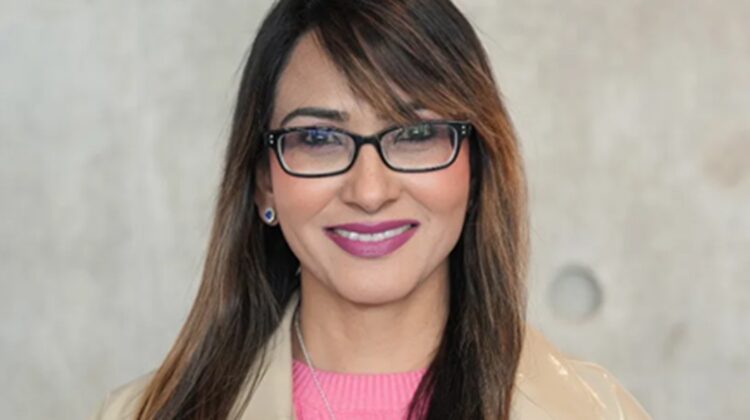
Roshila Moodley, Lecturer in Analytical Chemistry in the Department of Chemistry, is passionate about helping all students feel supported to succeed. From making the ‘hidden curriculum’ more visible to creating space for students to share their experiences, her work focuses on breaking down barriers to learning. Recently nominated for a Distinguished Achievement Award, we spoke to Roshila to find out how she is supporting MSc students from diverse backgrounds and how targeted funding has helped turn ideas into measurable impact.
Can you tell us a bit about your work with MSc students and what inspired it?
My role initially focused on the distance learning MSc programme and then I took on the on-campus postgraduate taught portfolio as well. One of the first things I noticed was just how diverse our student cohort is, particularly with a high proportion of international students. As an academic, I approached this from a research perspective. I wanted to understand what was really affecting student performance rather than relying on assumptions. One of the key findings was that language and academic conventions were significant barriers for many students and that shaped everything that followed.
You developed support for students through funding – how did that come about?
Once I understood the challenges I knew I needed to put something in place that was practical and impactful. That’s when I applied for the Teaching Excellence Development Fund which allowed me to develop dissertation writing and presentation workshops. The funding was crucial. It enabled me to bring in GTAs and support students over the summer period, which is when they’re writing their dissertations but often have the least structured support. Without that funding, those workshops simply wouldn’t have been possible.
What did those workshops involve?
They were designed to make the ‘hidden expectations’ of academic writing explicit. There’s often an assumption that postgraduate students already know how to write scientifically but that’s not always the case. We ran structured sessions on dissertation writing and presentation skills, along with mock presentations to help students build confidence in a safe, supportive environment.
I wanted to understand what was really affecting student performance rather than relying on assumptions
What impact did you see from this work?
The response was incredibly positive. Students really valued the support and academics noticed the difference too. What was particularly rewarding was seeing the measurable impact. The pass rate reached 100%, the number of distinctions increased and there was a clear improvement in both confidence and performance. Students felt more prepared, more capable and more in control of their learning. It also had a positive impact on colleagues as supervisors didn’t need to provide as much detailed support because students were better equipped from the outset. Even the Graduate Teaching Assistants said they learned a lot through the process, so it really became a shared learning experience.
You’ve been working on making the ‘hidden curriculum’ more visible and creating opportunities for students to share their experiences. Why is that important?
A lot of what students need to succeed isn’t formally taught – things like managing group dynamics, leadership or dealing with conflict. Through separate funding, I’ve been working with students to capture these experiences in a really practical way. They’re creating short videos reflecting on their group project work, sharing what they wish they had known before they started. These will be shared with future cohorts so they can learn from real student experiences and better navigate those challenges.
Alongside that, we’ve also created space for students to share their stories more openly. We recently ran a student storytelling event where students spoke about things like imposter syndrome and overcoming challenges. The response was incredibly powerful. Students came up afterwards saying it made them realise they weren’t alone. That sense of belonging is so important. When students feel supported and see others like them succeeding, it changes how they see themselves and what they believe is possible.
When students feel supported and see others like them succeeding, it changes how they see themselves and what they believe is possible
Your work seems deeply rooted in inclusion. Where does that motivation come from?
I started my career in South Africa during a time of major change in higher education and I saw first-hand the transformative power of education, particularly for students from disadvantaged backgrounds.
That’s stayed with me. Whether in South Africa or here in the UK, the core challenge is the same – creating an environment where all students feel they belong and can succeed. For me, excellence and inclusion are not mutually exclusive. You can’t have one without the other.
What would you say to colleagues considering applying for funding?
If you see something that could make a difference, take that step. The Teaching Excellence Development Fund made a tangible impact on my work. It allowed me to move from identifying a problem to actually implementing a solution and seeing real results for students.
Finally, how long have you worked at the University of Manchester and what brought you here?
I’ve been here for around four years now. Before that, I spent 19 years in South Africa where I was deeply involved in widening participation work, particularly through access programmes for students from disadvantaged backgrounds.
The move to Manchester was actually very personal. My son came to the UK to study and decided to stay, which led me to reflect on my own next steps. I applied for the role here and was offered the position. It was a big change, both professionally and personally, but it gave me the opportunity to continue the work I’m passionate about in a new context.
Inspired by this story? Nominate a colleague and help us celebrate more outstanding teaching.